Hard Time
- 4.0
- Rating
- 10.00M
- Installs
- Free
- Price

 Analysis by App-foxy
Hard Time is the kind of adventure game I open when I want something unpredictable rather than polished and carefully guided. Created by MDickie, it puts me in a prison where ordinary decisions quickly turn into trouble: a conversation can become a fight, a routine movement can attract attention, and a small mistake can change the direction of a whole attempt. The appeal is not a neat story with a guaranteed ending. It is the feeling that I am trying to manage a difficult situation with limited control.
That makes the game easy to misunderstand at first. It is free to download, carries a Teen age rating, and has attracted over ten million installs, but it is not a relaxed prison-management game or a conventional action adventure. I see it more as a rough, reactive sandbox built around survival, relationships, conflict, and improvisation. If you enjoy experimenting with unusual game systems, it has a personality that is hard to find elsewhere. If you prefer clear objectives, smooth controls, and predictable progress, the first few minutes may feel unnecessarily chaotic.
What the first attempt really feels like
The central challenge is learning how to exist inside a hostile environment without assuming that every problem should be solved by force. The store summary describes a prison where every sentence is a death sentence, and that grim idea shapes the mood. I am always weighing whether a confrontation is worth the risk, whether I should move away from a suspicious situation, and whether helping or provoking another character will create consequences later.
You May Also Like

 Blood Strike: 2.5 Anniversary
Blood Strike’s Loadouts Turn Every Drop Into a Tactical Gamble
A close look at Blood Strike’s custom loadouts: how fast access to signature weapons reshapes its battle royale rhythm, rewards preparation, and narrows the gap between fights.

 Pandora - Music & Podcasts
Pandora’s Music Is Easy to Start, but Harder to Recover
Pandora’s strength is its low-effort path from a seed to a station. Its weak spot is how much confidence it asks you to place in connection, setup, and quiet recovery.

 8 Ball Pool
 Is Built on Rivalries, Rematches, and Routine
A close look at the rivalries, rematches, shared routines, and unanswered safety questions that turn a quick pool match into a persistent mobile community.

 Samsung Music
’s Quiet Strength Is Playing What You Already Own
Its reach comes less from spectacle than from dependable access to a personal library. That simplicity is both the app’s strongest retention engine and its ceiling.

 AccuWeather: Weather Radar
AccuWeather Review: A Quick, Clear Forecast for Everyday Decisions
For everyday plans, the best forecast is the one you can understand quickly. AccuWeather makes rain timing, radar, and local conditions easy to act on, with a few trade-offs.

 Hill Climb Racing
Why Hill Climb Racing Still Turns Crashes Into One More Run
A tiny car, a bumpy hill and one more upgrade: Hill Climb Racing keeps resurfacing because its simple chaos makes every near-miss feel personal.
More From Our News Desk
View All News


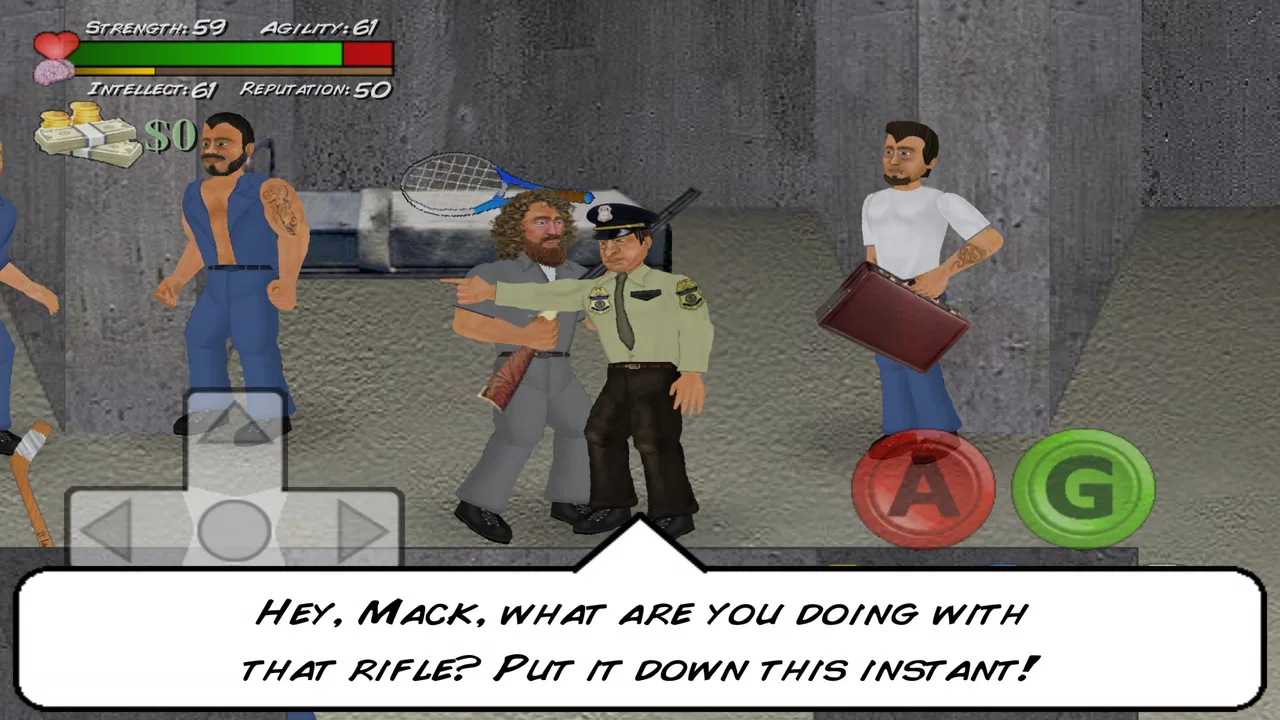
The game’s rough presentation is part of its identity. Characters and environments are presented in a simple, functional style, so the focus stays on interactions rather than visual spectacle. That simplicity can make events feel strangely funny, especially when several characters crowd into a situation and their reactions become difficult to predict. It can also make the world feel blunt. Animations and movement are not always as precise as I would like, and the lack of visual polish means I need to pay attention to context instead of expecting the game to explain everything elegantly.
My best advice for a first attempt is to treat the opening as an orientation period, not as a test that must be won immediately. Walk around, notice who reacts to you, and learn how quickly a harmless-looking action can become a serious problem. The first meaningful success is not necessarily escaping danger or dominating a fight. It is staying alive long enough to understand what caused the danger in the first place.
That mindset makes the experience much less frustrating. In many adventure games, failure usually tells me that I missed a clue or lacked a required item. Here, failure may come from poor timing, a bad relationship, an accidental collision, or an impulsive decision. I have to read the situation rather than follow a fixed recipe. The result is less comfortable, but it gives even ordinary moments more tension.
Starting without turning every encounter into a fight
When I first enter a new attempt, I resist the temptation to test every character immediately. The prison is crowded with possible sources of conflict, and aggressive experimentation can make the early game harder before I understand the basic rhythm. I prefer to move carefully, observe the surroundings, and use the first encounters to learn which actions are safe enough to repeat.
This is one of the game’s less obvious lessons: survival depends on restraint as much as courage. A player who attacks whenever an interaction feels unclear may create a chain of problems that looks like random bad luck. In reality, the trouble often begins with one unnecessary decision. Waiting, repositioning, or leaving an area can be a genuine strategic choice, not a sign that I am playing passively.
Controls require patience. On a touch screen, I sometimes need an extra moment to make sure I am moving or interacting as intended, especially when several characters are close together. That friction matters because a small input error can have a large consequence. I recommend playing the first session somewhere I can concentrate, rather than trying to learn it while distracted or during a short commute.
The game is available on Android and iOS, and the current version is 1.530.64. It requires Android 7.0 or later on compatible Android devices. Those details make it approachable for many players, but compatibility is not the same as comfort: the experience still benefits from a screen and control response that let me distinguish movement from interaction.
The first useful goal is learning a repeatable routine
Instead of chasing dramatic results immediately, I try to create a routine that keeps the character out of unnecessary danger. I move through familiar areas, watch how other characters respond, and avoid making several risky choices in a row. This gives me a baseline. Once I understand what a normal moment looks like, unusual behavior becomes easier to recognize.
A practical technique is to separate exploration from confrontation. During one part of a session, I focus on finding my way around and understanding the environment. During another, I test one risky interaction at a time. If I combine exploration, provocation, and experimentation all at once, it becomes difficult to know which decision caused the consequences. Separating those goals turns the game’s apparent randomness into something I can gradually analyze.
I also recommend accepting an imperfect outcome. A successful attempt does not have to look heroic. Avoiding a fight, recovering from a mistake, or reaching the next stage of a situation can be more valuable than winning a spectacular confrontation. This is especially important for new players because the game does not always reward the most dramatic action immediately.
One of the strongest uses for the game is short, focused experimentation. I can play for a while, notice one unusual interaction, and return later with a different plan. It is less suitable when I want a long, relaxing session with steady rewards. The tension comes from uncertainty, and that same uncertainty can become tiring if I am not in the mood to improvise.
Why the prison feels confusing at first
The biggest adjustment is understanding that the game does not behave like a guided adventure with a single obvious path. The setting supplies pressure, but I am responsible for deciding what deserves attention. A character who seems unimportant may become relevant after an interaction, while a promising plan can collapse because the surrounding situation changes.
I sometimes catch myself looking for a clean objective marker or a simple explanation of what I should do next. That expectation comes from more conventional adventure games, where the next task is usually stated clearly. Here, the useful question is often more basic: what can I safely attempt right now, and what information will I gain by doing it?
Another source of confusion is the difference between control and influence. I can choose actions, but I cannot make every character behave exactly as I want. Their reactions may disrupt a plan, and the game’s rough physical interactions can make a scene escalate quickly. Rather than treating that as a broken promise of control, I see it as the main challenge. I am managing risk inside a system that does not fully cooperate.
That does not mean every problem feels fair. There are moments when movement, crowded spaces, or unclear interactions make the result harder to interpret than it should be. The simple presentation also leaves me doing more mental work than I would in a polished adventure game. Players who need precise feedback may find this tiring, especially during repeated failures.
The Teen rating is worth taking seriously. The prison setting, violence, and generally harsh tone are not presented as a gentle cartoon scenario. I would not choose it for a child or for someone looking for a calm family-friendly experience. Its humor can be absurd, but the underlying situations remain aggressive and stressful.
Small decisions that make later attempts better
My first concrete tip is to keep a mental record of cause and effect. If a particular interaction leads to trouble, do not simply label the whole game random. Ask what changed: location, timing, proximity to another character, or the action itself. Repeating the same experiment under slightly different conditions can reveal patterns that are invisible during a frantic first attempt.
My second tip is to avoid spending all of my attention on one character or one confrontation. The prison is more interesting when I observe the wider situation. A nearby movement or reaction can matter as much as the person directly in front of me. Looking beyond the immediate target helps me avoid tunnel vision, which is one of the easiest ways to walk into a worse position.
My third tip is to use failure as a planning tool rather than an automatic reason to quit. When an attempt ends badly, I ask whether the lesson was about timing, positioning, patience, or an incorrect assumption about how the environment works. This is not as satisfying as receiving a clear tutorial message, but it makes the next attempt feel more deliberate.
A fourth trade-off is worth mentioning: playing aggressively can produce faster excitement, but playing cautiously usually produces better information. I sometimes choose aggression when I want to see how the system reacts, yet I would not recommend it as the default approach for a newcomer. The most reliable path to a first satisfying session is controlled curiosity.
How it compares with more familiar adventure games
Compared with story-led adventure games, this one offers less certainty and less emotional guidance. There may not be a carefully staged sequence that makes every major moment feel important. Instead, the memorable scenes come from unexpected combinations of actions and reactions. I get more freedom to create a personal story, but I also receive less help understanding whether I am progressing correctly.
Compared with prison-management games, it puts me closer to the immediate danger. I am not mainly arranging schedules, expanding facilities, or optimizing a distant institution. The pressure is personal and physical. I experience the environment from inside it, which makes mistakes feel immediate but also limits the calm planning that management players may expect.
Compared with polished mobile action games, it is rougher and more experimental. Those alternatives are usually better when I want responsive combat, strong presentation, or a clear reward loop. Hard Time is better when I want a strange simulation where the rules interact in surprising ways. The choice depends less on genre labels than on whether I value control and polish or freedom and unpredictability.
That comparison also explains who should skip it. I would not recommend it to someone who dislikes repeated failure, awkward touch interactions, or situations that can escalate without a perfectly clear warning. I would also skip it if I wanted a relaxing game for a few minutes of effortless progress. The game asks me to tolerate confusion before it starts giving back interesting stories.
On the other hand, it suits players who enjoy testing systems, inventing their own goals, and laughing at situations that no scripted writer would have planned. It is particularly appealing if I like games where a failed plan can still produce a memorable result. The experience is not about reaching one ideal solution; it is about seeing how far a fragile plan can survive.
What the free version means in practice
The game is free, with in-app purchases listed at $2.99 per item. That makes it easy to try without committing money at the start. I would still approach any purchase carefully and decide whether it improves the way I personally want to play rather than assuming it is necessary for the basic experience.
The audience response suggests that the game has lasting visibility: it holds a 4.0 average from around 371 thousand ratings, alongside roughly 30 thousand written reviews. Those figures do not guarantee that I will enjoy its unusual design, but they do show that the rough sandbox approach has found a substantial audience over time.
Its release on October 3, 2013, also helps explain why the presentation can feel different from newer mobile adventures. I do not approach it expecting modern visual standards or a tutorial built around every current convenience. I approach it as an older, distinctive game that has continued to receive a current version rather than as a new release competing only on presentation.
For an everyday scenario, I can imagine playing it after work when I want a game that gives me a story without asking me to follow a long campaign. I might begin with a cautious plan, make one poor decision, spend the next few minutes trying to recover, and finish with an outcome I never intended. That session can be more memorable than a perfectly executed level, but it can also be frustrating if I only have ten minutes and want a clear conclusion.
Who will get the most from the next step
Once I can survive the opening without treating every encounter as an emergency, I start setting personal challenges. I might focus on avoiding unnecessary conflict, testing how different approaches affect a situation, or seeing whether a risky plan can be completed without collapsing immediately. These self-made goals give the sandbox direction without forcing it into a conventional mission structure.
I also recommend changing only one major habit at a time. If I become more cautious, alter my movement, and experiment with several interactions simultaneously, I lose track of what helped. A measured approach makes improvement visible. The game rewards this kind of patience because its most useful information often comes from comparing similar attempts.
There is no need to rush toward the most dramatic possible outcome. The prison setting naturally encourages escalation, but the deeper appeal is learning when escalation helps and when it simply removes options. A player who understands that distinction will usually have more interesting sessions than one who treats every problem as a contest of strength.
After spending time with it, I see Hard Time as an unpredictable survival sandbox rather than a conventional adventure. MDickie’s game is free, distinctive, and capable of producing situations I will remember, but it asks me to accept rough controls, unclear consequences, and a demanding Teen-rated atmosphere. My recommendation is simple: try it if you enjoy experimentation and can be patient with failure. Skip it if you want polished action, a guided story, or dependable progress.
The best first-session target is modest: learn one safe routine, understand one cause-and-effect pattern, and finish with enough knowledge to make the next attempt different. Once that happens, the apparent chaos becomes more readable. I may still lose control of a situation, but I will understand why I took the risk—and that is where this unusual adventure game becomes genuinely engaging.
Hard Time is currently at version 1.530.64, remains free to start, and is available for players using compatible Android and iOS devices. I would recommend installing it with the expectation of discovery rather than comfort. Give it time to reveal its rules, keep your first goals small, and judge it by the stories its systems create instead of by the smoothness of its presentation.
FAQs for Hard Time
01What is the main objective of Hard Time?
Hard Time is a prison simulation game where players navigate life inside a penitentiary. The main goal is to survive and gain influence in a harsh environment. Players must manage their character’s needs, build relationships, and avoid trouble to eventually earn their freedom.
02How do the controls work in Hard Time?
Hard Time offers intuitive touch controls for both Android and iOS. Players can move their character using a virtual joystick, while actions such as attacking or interacting with objects are performed with on-screen buttons. The game also supports external controllers for a more traditional gaming experience.
03Are there in-app purchases in Hard Time?
Yes, Hard Time includes in-app purchases that allow players to enhance their gaming experience. These purchases can help with character customization or provide additional resources. However, the game can be fully enjoyed without spending money, thanks to its rich content and replayability.
04Is Hard Time suitable for all age groups?
Hard Time is rated for mature audiences due to its depiction of prison life, which includes violence and adult themes. Parents should be aware of the content and assess whether it is appropriate for younger players. The game’s setting and scenarios are designed for those who can handle mature themes.
05Does Hard Time require an internet connection to play?
No, Hard Time can be played offline, making it an excellent choice for gaming on the go. However, some features, such as leaderboard updates or certain in-app purchases, might require an internet connection to function properly.
Pros
- Unique prison simulation experience.
- Engaging storyline with multiple endings.
- Customizable characters and scenarios.
- Challenging gameplay with strategic elements.
- Offline play available for convenience.
Cons
- Graphics feel outdated and basic.
- Controls can be awkward at times.
- Frequent ads interrupt gameplay.
- Limited tutorial for new players.
- Soundtrack can become repetitive.

Hard Time
Gallery